The Brooklyn Transfer
On the New Yorkers who left Brooklyn, crossed an ocean, and found themselves in East London.
The Brooklyn Transfer
On a Saturday morning in early March, Rachel Diaz is at Broadway Market with a coffee she has been nursing for forty minutes, watching the stalls fill up. she grew up in Queens but has lived in Hackney for six years. She still does a double-take sometimes. "I'll be standing exactly here," she says, gesturing vaguely at the canal, the vintage rails, the queue outside Pavilion Bakery, "and for a second I genuinely don't know which city I'm in. The light is different, the clothes are more faded, okay and maybe the sky is lower. Everything else is sort of the same."
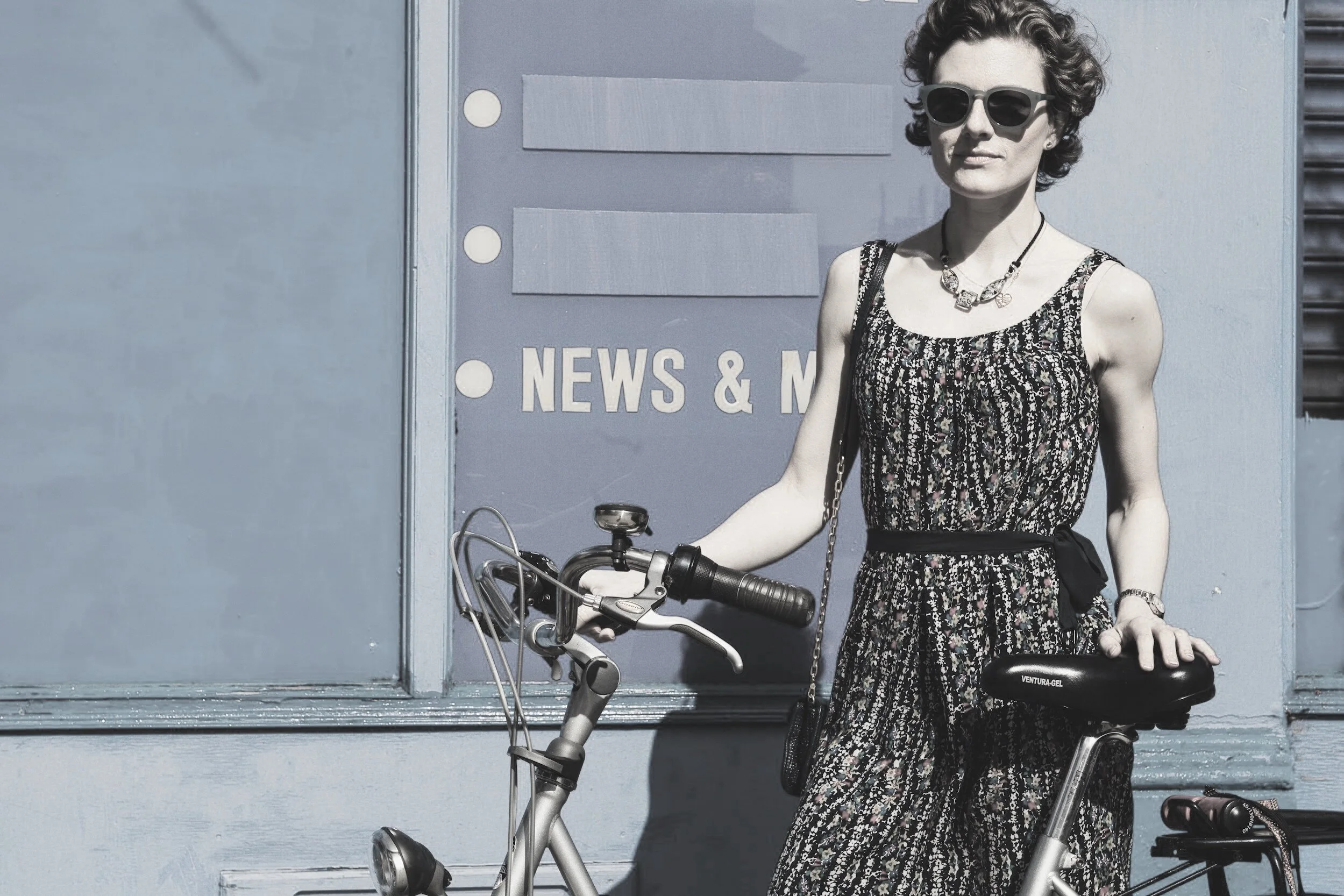
Rachel Diaz from New York.
Rachel is forty-one, an architect, and she carries herself with the slightly distracted air of someone whose brain is always half on a project. She came to London on a fellowship at the Architectural Association in 2017, fully intending to go back until, that is, she met someone. Then she got a commission. Then Hackney happened to her in the way that Hackney happens to people — gradually, and then completely.
Hackney happens to people. Recently, those people have been Americans. New Yorkers, specifically. Increasingly, there is a well-worn path between Brooklyn and Hackney that nobody has properly written about. Designers, editors, photographers, founders — people who built a life in Williamsburg or Bushwick or Fort Greene, and then found themselves, a few years later, standing outside a Victorian terrace in E8 thinking: this feels exactly like home.
The neighbourhoods rhyme. The coffee shops, the independent bookshops, the natural wine bars, the studios above the dry cleaners, the Saturday markets, the particular kind of person who moves there because they couldn't afford Manhattan and stayed because they couldn't imagine leaving. The creative class finds its level and increasingly, that level runs through both postcodes.
It is not a new observation that Hackney and Brooklyn share a DNA. People have been making the joke for years — usually someone nursing an oat flat white on Broadway Market, noting with mild embarrassment that this could very easily be a street in Williamsburg. But the joke has become something more interesting than a joke. It has become a migration pattern.
Ask around and you find them everywhere. The art director who followed a relationship to London and stayed long after the relationship ended. The photographer who came for a commission and signed a studio lease on her fifth day. The editor who kept extending her lease until extending her lease became simply living here. They are not tourists. They are not expats in the traditional sense. They are people who went looking for a place that felt like the place they'd already found — and discovered it existed, at a slight remove, six time zones away.
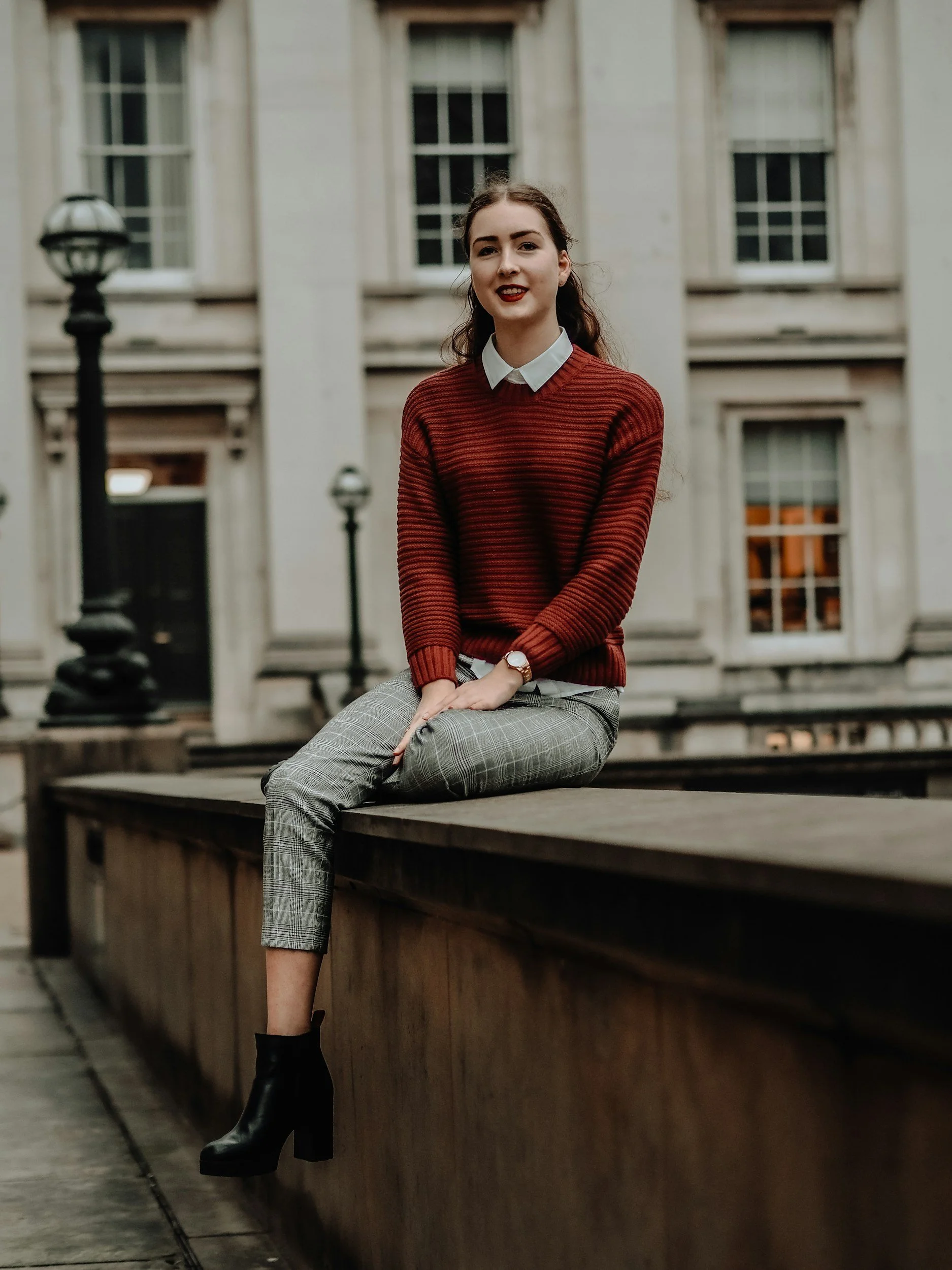
Margot Ellis in London
What draws them is harder to name than a list of amenities and free healthcare. It is something about the texture of the place. The way Hackney still contains its own contradictions — the Victorian terraces and the warehouses, the long-established Bangladeshi and Turkish communities and the new galleries, the chicken shops and the wine bars — without having fully resolved them into something glossy and legible and safe. Brooklyn had that quality once. Whether Hackney holds onto it is the question everyone here is quietly asking.
Rachel finishes her coffee. Someone at the next stall is selling vintage Levis and playing Peaches at a volume that feels exactly right for the morning. "The thing about Brooklyn," she says finally, "is that it got bought. Someone worked out what it was worth and sold it to the highest bidders. Hackney is still in the middle of that argument, and maybe there is a second wave. That window doesn't stay open forever." She says it without bitterness. More like a woman noting weather conditions.
Margot Ellis arrived in London the same year with two suitcases and a return ticket she never used. She had been art directing for a fashion magazine in New York — good job, good apartment in Greenpoint, good life by most measures — and then she followed someone here and the someone didn't work out and Hackney did. She has a studio now on Chatsworth Road, up a narrow staircase above a Turkish supermarket. The walls are covered in reference images, torn pages, colour swatches. The rent is what she used to pay for a parking space in Brooklyn and yes, she mentions this to anyone who will listen approximately once a week.
"I kept waiting to feel like I was somewhere temporary," she says. "Like London was a holding pattern until I figured out what came next. But at some point I stopped waiting and just — started. And now this is the thing."
The thing is a studio practice that has grown, quietly and without much fanfare, into something she couldn't have built in New York. Smaller clients, stranger briefs, more creative control. A ceramics brand in Hackney Wick. A literary magazine that pays almost nothing but lets her do whatever she wants. "In New York everything is about scale," she says. "Everything has to be bigger, faster, more. Here I found people who were just making things. Because they wanted to make things. That sounds obvious but it genuinely wasn't where I was."
She misses the bagels. She misses the particular aggression of New York, the way the city argues with you constantly and somehow that friction is generative. Hackney is gentler, and perhaps more elegiac. She is not sure yet whether gentle is what she needed or just what she got. "Ask me in another year," she says. "I've stopped making predictions."
Which is, perhaps, the most Hackney answer of all.
Housefolk lists rooms, flatshares and sublets in Hackney, Brooklyn and Melbourne. Because we have always believed these places belong in the same sentence.
